
TECH
Dreammeaniing.com USA Site Facts for American Readers


Dreammeaniing.com is an English-language WordPress site that publishes dream interpretations next to a good deal of unrelated writing, and nothing on it ties it to the United States. The usual questions about dreammeaniing.com USA are whether it’s an American site, whether it’s legitimate, and whether its readings can be trusted. The site’s own pages answer the first with silence, the second with a standard disclaimer, and the third with an admission that the meanings are for entertainment. That last point matters most, because the research behind dream symbols is thinner than the confident tone of most dream pages online suggests.
The Bottom Line
Dreammeaniing.com is a general WordPress blog with a dream interpretation section and an AI chat box. Its About, Disclaimer, and Privacy pages name no company, address, or country, so nothing supports calling it an American site. Treat its readings as entertainment and check any legal or health advice elsewhere.
What dreammeaniing.com USA readers actually get
The dream pages
The homepage promises plain-language dream interpretations, symbolism breakdowns, and spiritual meanings, and the About page describes the method as symbolism, psychology, and common patterns people report. Browse the Dream Meanings category and you’ll find single-topic pages on ex-partners, an octopus, a white owl, hair, and a dream of receiving paper money read through an Islamic lens. A snake-bite page is framed through Hindu astrology, so the site mixes psychological, religious, and astrological frames without telling you which one a given page rests on.
A pop-up labeled Dream Interpretation also invites you to describe a dream and get an AI response. The privacy policy covers comment and contact-form details, Google Analytics, and Google AdSense, and it doesn’t mention the chat feature. Until it does, keep names, health details, and other identifying information out of the box.
The pages that aren’t about dreams
Dream content is now a minority of what gets published. Counting the titles listed on the homepage as of October 23, 2026, three of the ten newest posts are about dreams (arrest dreams, running and straining, hair), while the other seven cover quality processes, an AI video generator, pricing, emergency plans, Amazon repricing, and proprietary trading firms. The Dream Meanings category is no cleaner, since four of the ten posts on its first page, all dated August 2026, are an Instagram story viewer roundup, a pellet dryer explainer, a casino-style gaming review, and a boom lift tracking guide. Those counts will shift as new posts go up.
That mix matters to a US reader in a practical way. The category list runs to 23 entries, including Law, Finance, Health, Crypto, CBD, and Vape, so posts on regulated subjects sit beside dream symbolism under one brand and a generic byline. Rules on online gaming, vaping products, and cannabis-derived items differ by state and by country, and a page that never says where it applies can’t tell you whether it applies to you.
Where the site places itself, and where it stays silent
No page states a company name, street address, or country. The Disclaimer and Privacy Policy refer only to DreamMeaniing and its owners or contributors, and the homepage metadata carries an en_US language tag, which signals American English rather than a US operator. That same metadata dates the homepage to November 24, 2025, so this is a young site.
Where the site does show a location, it isn’t the United States. The arrest-dream article presents its rights checklist as Canadian law, mentions a Feeney warrant, and credits an Edmonton criminal defence firm, while its own disclaimer sends readers to a defence lawyer in their province. A reader in the US who followed that checklist literally would be leaning on another country’s rules, so for anything legal, American procedure and an American lawyer are the right references.
Spelling deserves a glance too. The brand is written with a doubled i, and a recent comment on the site carries a link to dreameaninng.com, a different spelling with a doubled n. Nothing on the pages connects the two, so confirm the exact domain in your address bar before you enter anything or follow advice attributed to either.
Where the “usa” part goes wrong
The assumption behind adding a country to a site name is that there’s a regional edition, a US-based operator, or US-specific rules to find. That habit comes from retail brands with separate country sites, where the extra word really does filter results. For this site it filters nothing, because the pages show one English-language site, nothing pointing to regional editions, and no US-specific content, while the one article that does name a jurisdiction names a Canadian one.
A second slip is treating the odd spelling as a sign of an official variant or a copycat of a better-known dream site. The evidence supports neither idea, since meaniing appears consistently across the title tags, policy pages, and footer, which is how this brand is simply spelled.
What dream symbol readings can and can’t tell you
Dream dictionaries tend to pair one symbol with one meaning, and Wikipedia’s entry on dream dictionaries notes that the psychology community generally doesn’t consider that approach scientifically viable. Carl Jung cautioned against assigning meaning to a symbol without knowing the dreamer’s personal situation. Ann Faraday observed that most dreams seem to reflect what occupied the dreamer’s mind in the previous day or two.
Belief in dream meaning runs high in the US. A 2009 study by Carey Morewedge and Michael Norton, summarized on Wikipedia’s dream interpretation page, found that 56% of Americans believed their dreams gave meaningful insight into their unconscious beliefs and desires, against 74% of Indians and 65% of South Koreans. Participants also rated dreams as more meaningful than similar waking thoughts, and they judged a dream more meaningful when it matched what they already believed or wanted.
That pattern points to a simple rule: a reading works as a question, not a verdict. Before accepting any page’s interpretation, run it past these three prompts.
- What happened or worried you in the last two days?
- What did you feel inside the dream itself?
- Does the reading name something you can check or act on, like a conversation you’ve been putting off?
A reading that predicts events, money, or what other people secretly think gives you nothing to test, so skip it. The site’s own disclaimer calls the content educational and entertaining and says readers shouldn’t rely on it alone for important decisions. If nightmares keep disrupting your sleep, a doctor or licensed therapist is a better route than any symbol list.
A short check before you rely on any page there
These five habits take a couple of minutes and catch most problems.
- Match the page to its category. A post filed under Dream Meanings can be a product review, as the August posts show.
- Check the byline and date. Most recent homepage posts carry only the name Admin, so credibility has to come from sources named inside the text.
- Match the jurisdiction. For law, taxes, money, or health, go to an official US source such as your state regulator, not a page that never says where it applies.
- Read promotional posts as promotion. A page that names a company and its products and lists no disclosure shouldn’t be assumed independent.
- Keep the chat box impersonal, since the privacy policy says nothing about how those entries are handled.
Beyond these five, there’s a two-minute check you can run on any unfamiliar site that starts with reading the menu and counting the archive, and it works on odd domain names of every kind.
Conclusion
Dreammeaniing.com USA turns out to be an English-language blog with a dream section, no stated country, a mix of unrelated posts, and readings that work best as prompts for your own reflection. Pick the dream page that matches what you saw, jot down what you felt and what happened the day before, and decide whether the reading fits before you accept it. If a post touches law, money, or health, check it against an official source from your own country first.
FAQ
Do I need an account or a payment to read the pages?
The privacy policy says no personal information is collected just to access content, and no pricing or login page shows up in the menu. The site is supported by Google AdSense ads, according to its disclaimer.
Can I ask the site for a personal reading of my dream?
The Contact page invites readers to ask a question, request a dream interpretation, or report a problem on the site. It doesn’t say who answers or how long that takes, so treat any reply as general commentary.
Why does the same dream keep coming back?
Repeating dreams are commonly linked to a stressor or worry that hasn’t been resolved. A short journal with the date, the main image, and your mood on waking makes the pattern easier to spot over a few weeks.
Is dream interpretation a modern idea?
Not at all. Wikipedia traces written dream interpretation in Mesopotamia back to at least 3100 BC, and later authors include Artemidorus in the 2nd century AD and Ibn Sirin (654 to 728), whose works still shape how dreams are read in many communities.
Is the site meant for children?
The privacy policy states it isn’t directed at children under 13 and that it doesn’t knowingly collect their information. Younger readers who get scared by a dream are better helped by a parent or caregiver than by a symbol list.

Digitalconnectmag.com is Digital Connect Mag, a WordPress publication that lists a Bangkok address, covers technology, software, gaming, business, finance and crypto in short articles, and openly takes guest posts. Pages elsewhere on the web call it a hub for digital transformation insights, with podcasts, webinars and interactive infographics, but the site’s own menu shows none of those. What it does show is a long run of streaming-alternatives lists, a software and gaming section, and an invitation to guest authors who want a backlink. That gap between the reputation and the reality shapes how much weight any single post there deserves.
Short Answer
Digitalconnectmag.com is Digital Connect Mag, a general blog covering tech, software, AI, crypto, finance, gaming and streaming lists. It welcomes guest posts with backlinks, so voices and standards vary from post to post. Judge each piece by its own date and sources, and ignore the digital transformation hub label.
What digitalconnectmag.com actually publishes
A ten-item menu that covers everything
The homepage is titled Digital Connect Mag, with the tagline Tech, Biz and IT, and its meta description promises gadgets, startups, Silicon Valley, Wall Street, artificial intelligence and cryptocurrency. The top menu lists ten sections: Websites, News, Blog, IP Address, How To, Social Media, Gaming, Software, Business and AI. Sub-items add Fintech, Activation, Classroom Games, Apps, Crypto and Finance. For a single publication that is a wide span, and it reads like a general blog open to any subject near technology or business.
Image paths across the site follow the standard folder layout of WordPress, a platform built for exactly this kind of steady, high-volume article publishing. Under Websites, five submenu links point to free movie streaming sites, anime sites, manga sites, sports streaming sites and a torrents and proxies page. Lower on the homepage sits a block of twelve lists of alternatives to named streaming and manga services, every title stamped 2025. That block is the most dated material on the page and the kind that ages fastest, since one URL slug announces that the original site it covers has already closed.
What the newest posts look like
The newest items are a gaming piece on FC 27 coin strategies dated October 21, 2026, and a personal branding article updated the same day. Before that, a September 2026 run of AI and software pieces includes custom software versus ready-made platforms, work order software, salon software and an AI interface becoming the new operating system for digital work. Headings in the business, finance and news areas sound more commercial, such as a ranking of MVR check services, crypto payment solutions, CFD trading and the cost of a white-label casino platform. Several are vendor roundups, and which of them are paid placements can’t be seen from outside the site.
Where the transformation-hub story comes from
Search the name and seven unrelated domains return the same passage, headed Your Ultimate Hub for Digital Transformation Insights, on hosts that have no obvious link to the magazine. The passage promises podcasts, webinars, video interviews and interactive infographics, and one line in it even refers to digitalconnectmag.org, a different top-level domain. The real site’s menu and homepage list none of those formats. Other write-ups disagree with it and with each other, one setting the site beside HubSpot’s blog, TechCrunch and Moz in a feature table, another describing a mix of startup, marketing and financial-tools coverage.
The mistake is treating repetition as evidence. A name that gets searched often attracts thin pages, each copying or paraphrasing the last, and after a few rounds the invented description looks like consensus. The correct record is the site itself, meaning its menu, its About page and its newest posts, and those say something much plainer than the copied text.
Even the site’s own About page doesn’t match its output. It describes a mission built around digital privacy and online security, a team of cybersecurity analysts and a group of fact-checkers, while the homepage is mostly software roundups, gaming and streaming lists. The homepage can’t show what sits deeper in the archive, so a security section may exist somewhere. But the front of the site, which is what most visitors see, doesn’t reflect that mission.
Who writes for it, and what that means for trust
What the guest post terms say
The Write For Us page invites guest posts on technology, business, digital marketing, SEO, gaming and cloud topics, and it says plainly that it also serves writers looking for reliable backlinks. Articles should run at least 1,000 words and ideally 1,500 to 2,000, with a cap of 3,000, and each may carry one link in the body. Once published, the site owns the piece, and its editors quote three to five working days for review. The same page says it is open to blog advertising, so commercial placements are clearly part of the picture.
Bylines on the homepage fit that mixed model. A few names, including Anna Odrynska, Shawn and Daniel Greenfield, appear repeatedly, while others such as Andrey Davidov and Tom Caldwell show up once or twice, and at least one September 2026 post carries no byline at all.
How to treat contributed content
Contributed content tends to follow the contributor’s goal, which is usually a link to a product or service, so vendor roundups and explainers on commercial software are exactly what a guest-post model produces. None of that makes a post wrong. It means each article carries its own sourcing standard, and you can’t assume the editorial voice behind one piece also stands behind the next.
The same drift between description and reality turns up around revealspro.com, a small blog that other pages have labeled both a tax service and an SEO tool. In both cases the quickest check is to read what the site itself publishes.
A four-question filter for any post on the site
Because standards vary by author, a short filter works better than a verdict on the whole site. Ask these four questions of any article before acting on it.
- Date. Is the post dated this year, with a recent update? A title year of 2025 means at least nine months of drift by October 23, 2026, and likely more, which is why the streaming alternatives block fails first. Update stamps need care too: three older gaming posts, one originally from April 2023, all show October 5, 2026, which looks like a batch refresh, so a stamp tells you a page was touched, not that its facts were rechecked.
- Source. Does it point to a regulator, a vendor’s own documentation or the original announcement? A claim with no source is an opinion.
- Fit. Does the topic match what the site says it does? A security mission on the About page and a casino platform cost piece on the front page don’t line up, so that post has to prove itself.
- Interest. Is the article selling something, and does its single link lead there? Treat a vendor roundup as a starting list to check, not a ranking.
For money, company formation, trading and legal topics, go to the official source instead of relying on the site. A post on how long it takes to form an LLC can describe the general process, but the timing that applies to you comes from the relevant state filing office.
One more habit applies to the streaming and torrent lists. Free streaming services are often unlicensed in a given country, and ad-heavy pages around them are a common route to unwanted software, so check the legal position where you live and don’t install anything an ad prompts you to download.
If you’re weighing a guest post there
Start with the terms, because they decide what you keep. The site takes ownership of what it publishes, so you can’t run the same article elsewhere, and you get one link in the body, which means the anchor and the surrounding sentence need to be right the first time. Relevance matters next, since a link from a page about gaming or streaming alternatives only helps readers if your own topic belongs near it. Traffic and authority figures for the domain differ between third-party tools, so use them as rough guides and look at the live page yourself before you commit.
Conclusion
Treat digitalconnectmag.com as a general tech, business and gaming blog with an open guest-post door, and set aside the transformation-hub label that other pages repeat. Read each article’s date and sources before relying on it, and go to official sources for anything involving money, company formation or legal status. When an unfamiliar site name comes up next time, open its About and Write For Us pages first, since those two usually explain how the content gets made faster than any outside review can.
FAQ
Who owns digitalconnectmag.com?
The About page gives a Bangkok address and an email contact, and it describes a team and fact-checkers in general terms. It doesn’t name a parent company or an owner. For questions, the Contact Us page linked in the footer is the place to start.
How often does the site publish new posts?
Among the dated items on the front page, September 2026 has posts on the 3rd, 7th, 8th, 9th and 22nd, and the newest is dated October 21, 2026. That points to irregular bursts rather than a daily schedule. Many posts show no visible date at all.
Does it cover VPNs and online privacy?
Partly. The menu has an IP Address section, the How To area includes guides on temporary phone numbers and repeated unknown callers, and the About page says the team likes VPNs. Privacy is a stated theme, but gaming, software and streaming lists take up more of the front page.
Can I rely on its crypto and finance posts?
The site has Crypto, Finance and Fintech sections, with posts on crypto payment solutions and CFD trading. Read them as general background only, since nothing there is personal advice. For rules on trading or payments, check the regulator in your own country.
Is Digital Connect Mag on social media?
Yes, the site header links to a Facebook page and an X (Twitter) account named DigiConnectMag. An Instagram icon appears next to them, but its link is empty, so it doesn’t lead to a profile.
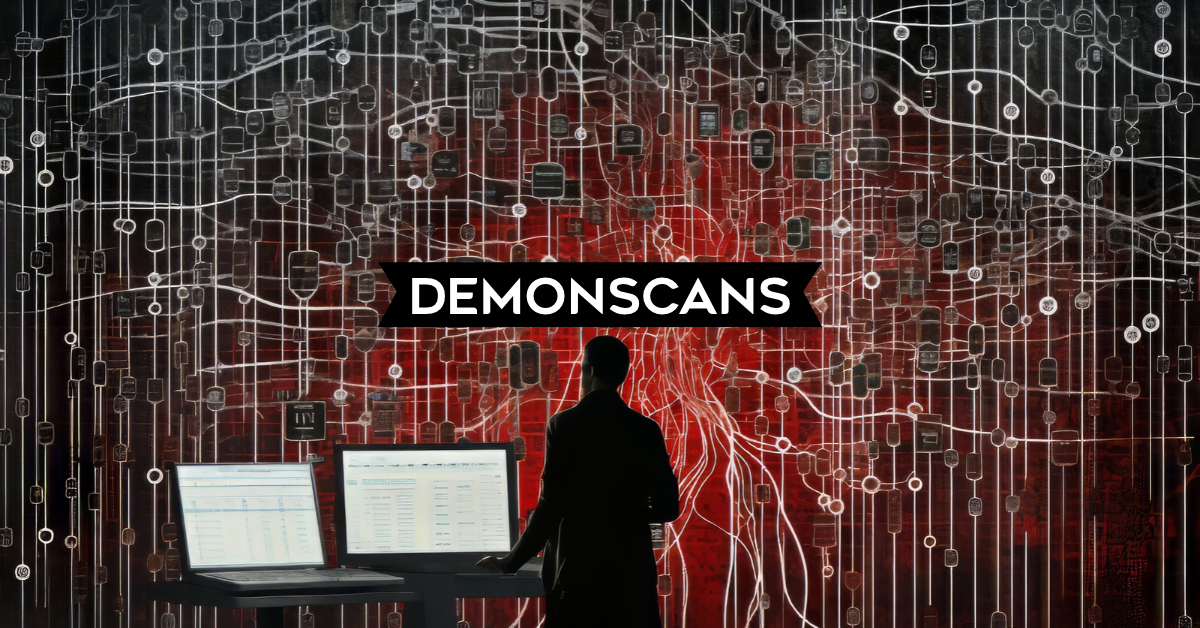
Demonscans is a common run-together spelling of Demonic Scans, a free website that posts fan-translated Korean manhwa without licenses from the publishers. Its catalog leans toward action stories about dungeons, regression, and overpowered heroes, it needs no account, and it updates quickly. Nothing about it is official, though, and both the chapters and the domains can change without notice. Two larger sites built on the same free-to-read model were shut down in 2026, one after a criminal investigation in China and one by Spanish police. Official apps such as Webtoon, Tapas, and Manta carry licensed manhwa, and that is where the creators get paid.
The Bottom Line
Demonscans means Demonic Scans, an unofficial, free website hosting fan-translated Korean manhwa. It is not an official publisher, its domains and ads vary, and similar sites have been shut down. Webtoon, Tapas, and Manta are licensed alternatives where creators are paid.
What the demonscans name points to
The site most people are after
Demonic Scans is a scanlation site, which means fans translate and typeset comics and post them without a license from the rights holders. Profiles describe a free, web-only reader that asks for no registration, with a catalog built around Korean action manhwa such as dungeon, regression, murim, and overpowered-protagonist stories. New chapters tend to appear soon after the raw release, and that speed is the main draw. Quality is uneven, with some chapters reading cleanly and others showing rushed translation and inconsistent terminology.
Those same profiles list the costs that come with the territory. No money reaches the creators or publishers, access can be unstable, and the interface is crowded with ads. None of this is a quirk of one site, since a free reader without licenses has to pay for itself through advertising and has to keep moving when complaints arrive.
Other pages that use the same word
A search for the term also surfaces pages that treat demonscans as something else entirely, either a paranormal-investigation term for ghost photos and audio glitches or a kind of hostile network scan in cybersecurity. Neither has anything to do with the manhwa site. These pages tend to read like automated filler, with generic definitions, no named author, and no way to check a claim, which is a good reason to skip them.
Why the address is the real problem
Several addresses claim to be the real thing. Different domain endings, and at least one spelling with a doubled s, each present themselves as the genuine site, and their descriptions disagree, with one promising a clean reading experience and an independent profile calling the interface cluttered with ads. Nothing a reader can see settles which one, if any, is run by the original group. That gap is what look-alike sites live in, because a clone can copy a catalog and a layout and swap in whatever ad network pays.
Ads are the second half of the problem. Free readers of this kind are funded by advertising networks, and those networks sometimes serve pop-ups, redirect tabs, and fake prize pages. The Spanish police case described below gives a sense of the money involved: investigators attributed more than four million euros in revenue to pop-up advertising on one site, and reports said much of it was pornographic.
Checking what a domain says about itself is the habit that protects you most here, and a smaller example of that exercise is this look at what revealspro.com actually is. Pages usually reveal their purpose in their own policy and contact sections, which a search snippet never shows.
Two shutdowns that show how this model ends
Neither of these involved Demonic Scans, but both ran on the same recipe of free access, unlicensed translations, and reliance on ads.
Bato.to in January 2026
Launched in 2014, Bato.to became for a time the largest manga piracy site in the world, with an estimated 350 million visits in May 2025. It went offline in late January 2026 after pressure from Japan’s Content Overseas Distribution Association and Korea’s Kakao Entertainment, and its operator was reported to be under criminal investigation in China. Cease-and-desist letters also went to people who ran social media accounts around the site, a step described as meant to discourage use.
TuMangaOnline in April 2026
Spain’s National Police announced the takedown of TuMangaOnline on 22 April 2026. It was a Spanish-language reader that had run since 2014, and three suspects were arrested in Almería. The investigation, called Operation Fumetti, started in June 2025 after a complaint from a Korean copyright body, and police reported seizing cryptocurrency storage devices worth more than 400,000 euros.
The pattern in both cases is the same. These sites look permanent right up until a rights holder files a complaint, and the reader is never the customer, since the advertiser is.
Where readers stand legally
In both cases the enforcement landed on operators, though the Bato.to letters show that people around a site can draw attention too. Whether reading on an unlicensed site is itself an offense depends on the country, and this isn’t legal advice. What doesn’t change from place to place is that the translators and uploaders hold no license, and the creators see no revenue from those reads.
The part of this search that misleads people most
The mistake is treating the first confident page as the real answer. A result titled demonscans can turn out to be a ghost-hunting essay, a security explainer, or a mirror posing as the original, and they rank partly because few authoritative pages cover the term. The accurate picture is narrower: the word refers to an unlicensed manhwa reader, no single domain can be confirmed from the outside as its official home, and any page promising a safe, ad-free, legal experience all at once deserves suspicion.
Choosing where to read instead
Two questions settle most cases. Does the series have an official English release, and can you wait for new chapters?
The table matches the usual reasons people use a scan site to a licensed route.
| What you want | Where to look | The tradeoff |
| Free reading | Webtoon or Tapas | Free episodes, but some series make you wait or pay for early access (Tapas uses timed unlocks and its Ink currency) |
| A series binged without paying per chapter | Manta | Subscription style; check current pricing and catalog for your region on its site |
| Licensed English releases of popular titles | Tappytoon, Lezhin, Toomics | Many titles are premium or paid |
| A series in its original release | Naver Webtoon, KakaoPage | Korean-language only |
If a series has no English license yet, the honest options are to wait or to read the original in Korean if you can. Search the title on Webtoon, Tapas, and Tappytoon before anything else, since a licensed release gives you the same story with stable links and no redirect tabs. Whatever you read on, don’t install an app or extension that a reading page asks for, and ignore any prompt claiming a prize.
Conclusion
Anyone heading to demonscans should look up the series on Webtoon, Tapas, or Tappytoon first, since an official release gives you the same story without the domain roulette or the ad risk. Where nothing official exists yet, waiting for a license costs less than dealing with a compromised browser. Keep an eye on the creator’s official pages for announcements, and skip any page that wants an install or a login just to read.
FAQ
What separates manga, manhwa, and manhua?
Manga is Japanese comics, manhwa is Korean, and manhua is Chinese. Manhwa is usually built for vertical scrolling on a phone, which is why it sits so comfortably on webtoon-style apps.
How can I tell whether a manhwa site is official?
Look for a named company in the footer or terms that you can check independently, an app store listing, and links from the creator or publisher. Webtoon names NAVER WEBTOON Ltd. as its operator, and Tappytoon labels itself as the official English release. A site with no named owner and several rival domains fails that test.
Which legal site should a first-time reader try?
Webtoon is the usual starting point for English readers, since it has a large catalog you can begin reading for free. If a title isn’t there, Tapas and Tappytoon are the next places to check.
What does “raw” mean on scan sites?
A raw is the original, untranslated chapter in Korean, Japanese, or Chinese. Translators wait for it before they start, so how fast a translated chapter appears depends on when the original is released in its home country.
What are murim and regression stories?
Murim is Korean martial-arts fantasy, typically built around sects and rival clans. Regression stories send a character back in time to relive their life with future knowledge, and both genres are staples of the action manhwa mentioned above.

Anyone searching charfen.co.uk is usually trying to work out what the site is before they read it, and the homepage offers two different answers. Its title and description pitch a business blog for startup founders, yet the posts published in the last few days cover wine coolers, roof repair, phone batteries and HIV treatment. In practice it’s a general-topic blog built from contributed articles under many bylines, and the founder-advice framing describes only a sliver of it. That matters because the trust a post deserves depends on its sources and author, not on the site’s mission statement. The October 2026 front page shows the gap plainly: seventeen titles, none about starting or funding a company.
The Bottom Line
Charfen.co.uk is a WordPress blog that publishes contributed articles on business, tech, health, travel, home improvement and lifestyle. It advertises itself to startup founders, accepts guest posts through a Write for us page, and carries many bylines. Treat each post as standalone writing and check its sources yourself.
Three descriptions on one homepage
The startup pitch
The homepage title reads “Charfen.co.uk We Help Startup founders,” and the meta description calls the site an informative business blog on entrepreneurship, leadership, digital marketing, finance and growth. The About page backs this up with a mission to connect business owners with advice from the people behind well-known companies, and it says every framework has been tested in real businesses. What it leaves out is any founder, company name, address or named expert. A claim of tested expertise with nobody attached to it is easy to write and impossible to check, so it carries little weight on its own.
The UK news line
Scroll to the footer and a third description appears, calling the site a platform for insights, news and analysis about the United Kingdom, from politics and current affairs to lifestyle and culture. The same blurb sits on the About page and the Write for us page, which suggests it was pasted in as boilerplate. Readers expecting UK current affairs won’t find them among the titles currently on the front page, which include Finnish digital media trends and the smallest airports in the US.
The open call for guest posts
The Write for us page explains the rest. It invites contributions on business, tech, lifestyle, health, travel, food and entertainment, asks for articles of 800 to 1,500 words, and promises feedback within 7 to 10 business days. Its opening line still contains an unfilled template prompt asking the writer to insert the topics the blog covers. With that policy, a wide topic spread is the expected result rather than a lapse.
What charfen.co.uk actually publishes
As of October 23, 2026, the front page lists seventeen recent titles. Sorting them against the three descriptions above makes the mismatch concrete.
| What the site says | What the pages show |
| A business blog for startup founders | None of the seventeen titles is about starting or funding a company |
| Expert advice from the people behind top companies | Six different bylines, and the About page names no experts |
| Advice tested in real businesses | Titles span roofing, orthodontics, HIV treatment and travel, with no testing method described |
| UK news and culture | Titles include Finnish digital media trends and US airports |
Home and trade topics dominate the list: wine and beverage coolers, a 15-foot parking lot light pole, LED strip lights, roof repair, water heater replacement, a bathroom design piece and a post recommending a specific painting company. Health appears through orthodontic bite problems and a post asking whether HIV treatment prevents transmission, and consumer tech through a cracked laptop screen and a draining phone battery. The Business category exists, but a lighting article filed there says more about how posts get tagged than about startup content.
Who writes the posts
Recent posts on the front page carry six bylines: Admin, Prime Star, Mr_Sufyan, Zonabia Khan SEO, Elite Media Agency and Team Technical. Several read like agency or team accounts rather than individual specialists, which fits the open guest-post call, though a byline can’t show who actually wrote a given article or whether anyone paid for placement. Reading times on the front page run from 8 minutes for the wine cooler piece to 24 for the Finnish media one, another sign that posts arrive from different hands with different standards.
The practical consequence is that no single editorial voice stands behind the site. Each article has to carry its own sources, and a confident tone tells you nothing about whether the content is accurate.
Template leftovers worth knowing about
The page code and login path point to WordPress, with the Elementor page builder named in the site’s metadata. Menu entries labeled Ingredients and Cooking Types sit beside a Newest Recipes block and a Weekly Meal Plans category, and both of those link out to the theme developer’s demo site at foxiz.themeruby.com instead of to pages on charfen.co.uk. The footer copyright still says 2025 although the newest posts are dated October 2026.
None of this makes the writing wrong. It does show a site assembled from a theme and not fully tidied, which is consistent with a high-volume publishing setup. The site also states that it is supported by advertising and asks visitors to whitelist it, so hover over any banner before clicking and skip downloads an ad prompts.
When a mission statement gets mistaken for a quality guarantee
The common assumption is that a site calling itself expert-led and tested must have vetted every post through experienced founders. It’s an easy mistake because the About page is the first thing most people read, and search results often reuse the meta description, so the promise arrives before any article does. Confident wording also feels like evidence, even when no names, methods or credentials sit behind it.
The more accurate reading is that those descriptions are marketing text in the site’s own voice. Evidence lives elsewhere: in the byline, the date, the sources a post links to and whether its numbers can be traced. A second wrong guess is that charfen.co.uk is a consultancy or startup service, but the menus show categories, a contact page and Write for us, with no pricing or service pages.
A sensible way to use the posts
Everyday topics
For choices like a fleece jacket versus a hoodie, or what to check before replacing a water heater, the posts are fair starting material. Compare any specific number or recommendation with a manufacturer page or a second independent source before spending money, since nothing visible says how the figures were gathered.
Health, money and law
Titles on HIV treatment and on a named medication belong in the background-reading pile only. Medical, financial and legal questions should go to the official body for your country, because those sources are accountable for staying current and a guest post is not. If a post gives a dose, a rate or a legal threshold, treat that as a prompt to look it up, not as an answer.
Anything dated
Check the publication date first, then ask whether the claim could have changed since. Prices, rules and product details age fastest, and the front page shows dates, so this takes seconds. The same gap between a site’s name and its content turns up elsewhere, as in the breakdown of what revealspro.com publishes, so the habit of checking before trusting carries over.
Conclusion
Treat charfen.co.uk as a starting point for everyday topics and a poor place to stop for anything risky. Pick the post you came for, find its date and byline, and look for a named source or official page that backs its key claim. If the claim involves health, money or law, take the figure from the official body for your country instead. Do that, and the gap between the mission statement and the posts stops mattering much.
FAQ
What does a guest contributor need to send in?
The Write for us page asks for a Word or Google Docs file, a short author bio of 50 to 100 words with a social or website link, and relevant images with proper credits. Pitches and finished articles go to the guest post email address listed on that page.
Do I need an account to read the site?
No. Posts and pages load without signing in, and the sign-in box that appears on the pages is the standard WordPress login for site accounts. There’s no reason to create one just to read.
Which categories does the site use?
The top menu lists Business, Food, Health, Home improvement, Lifestyle, News and Tech. The footer adds Software and Travel, plus a Blog index that collects the general posts.
How can I contact the site?
There’s a Contact us page in the main menu, and guest post inquiries go to guestpost@technicalinterest.com according to the Write for us page. A WhatsApp chat button also appears on the pages.
How often does it publish?
Often. As of October 23, 2026, the front page shows posts dated October 20, 21 and 22, with at least ten carrying the October 21 date alone.
-
 TECH2 weeks ago
Revealspro.com Is a General Blog, Not a Tax or SEO Tool
-
 TECH56 minutes ago
What Demonscans Is and Where to Read Manhwa Legally
-

 TECH1 hour ago
What charfen.co.uk Publishes and Who Writes It
-

 TECH47 minutes ago
What digitalconnectmag.com Publishes and Who Writes It
-

 BUSINESS3 minutes ago
What Growth Navigate Funding Means, With Worked Numbers